

Three quotations arrive for the same hot-dip galvanized steel wire, priced differently, structured differently and written by three people with three ideas of what was asked. Comparing them line by line without first normalising them is how buying decisions get made on formatting instead of substance. This guide gives hot-dip galvanized steel wire buyers the apples-to-apples method that makes three quotes into one decision.
Organisations study suppliers the way scouts study athletes: statistics, tests, trials â and then are surprised when the transfer fails on dressing-room grounds. In sourcing, the dressing room is communication: who speaks for the factory, in which language, across which hours, with what authority to say anything true.
As a manufacturer based in China, æ²³åèç¿é¢ç¼æéå ¬å¸ (www.suxiangsteelcable.com) supplies hot-dip galvanized steel wire, automotive spring steel wire, galfan steel wire and related products to customers in more than forty markets. In this guide we explain what actually determines quality in this category, how to assess a factory before you commit, and how to build a supply relationship that holds up over years of repeat ordering.
Before you send a request for quotation, be precise about what you are buying. These are the questions that separate a professional sourcing decision from a hopeful one.
What is the production capacity and current lead time? A factory that cannot state monthly capacity in units cannot forecast reliably.
Which quality standards apply, and can they evidence compliance? Ask for ASTM A475, EN 10244 documentation rather than a verbal claim.
Is material traceability documented? Certificates of material origin prevent costly surprises.
What is the defect rate and how are returns handled? Ask for historical data, not a policy statement.
Can they customize to your market's specification? Voltage, sizing, labelling and packaging often differ by country.
What after-sales support is included? Spare parts availability and technical support determine lifetime cost.
What is the total landed cost? Freight, duty and durability matter more than FOB price.
Quality in steel wire and cable products is the sum of four things: material selection, manufacturing precision, assembly consistency, and testing discipline. A product can look identical to a competitor and behave completely differently after six months in service if any one of these is weaker.
Material grade: the raw material must match the specification, with certificates to prove it.
Manufacturing precision: tolerances must hold across the production run, not just the sample.
Assembly consistency: repeatable processes prevent batch-to-batch variation.
Testing discipline: functional and safety testing must be routine, not exceptional.
For buyers, the practical implication is that you should evaluate capability rather than appearance. A well-equipped factory with documented processes will out-perform a low-cost workshop every time, even if the sample products look the same.
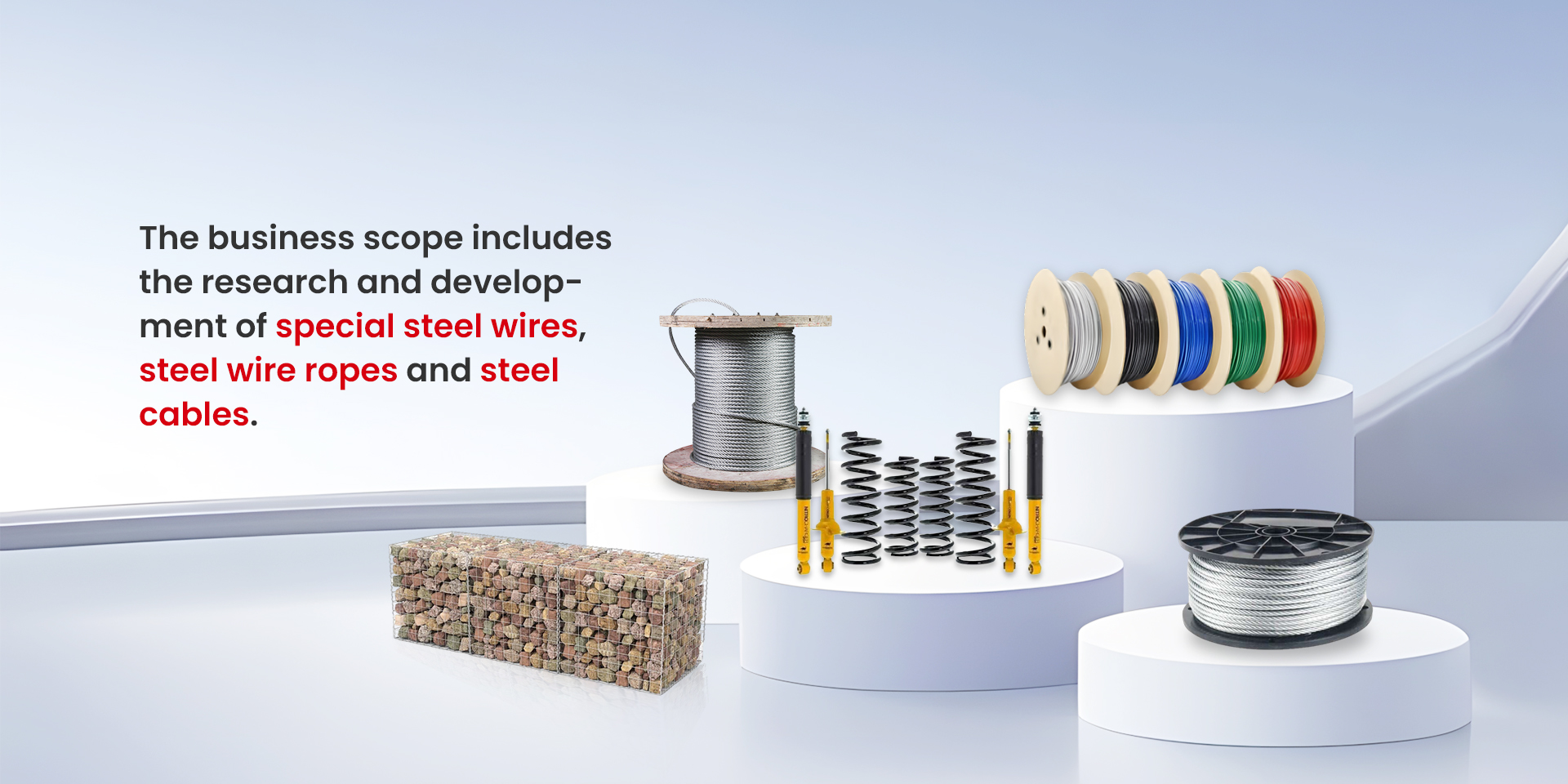
We recommend auditing five dimensions before the first paid order.
Ask for facility size, equipment list, monthly output, and the number of production lines. A factory that can describe its bottleneck process understands its own capacity. Request photos or a live video walkthrough of the production floor.
Confirm certification such as ISO 9001, ASTM A475 and ask to see the internal inspection records. A genuine quality system produces documents: incoming material checks, in-process checks, and final inspection reports.
Understand where raw materials come from and how they are verified. Vertically integrated suppliers control more of the quality chain and are less exposed to sub-supplier problems.
Ask which tests are performed in-house and which are outsourced to third parties. For export markets, third-party test reports from recognised laboratories carry more weight than internal claims.
Evaluate responsiveness during the quotation stage â it is a good predictor of post-sale behaviour. Ask about spare parts availability, technical documentation, and warranty terms in writing.
Most buyers eventually want their own branding, and the best time to discuss it is before the first order. Typical customization includes product sizing, colour, labelling, packaging, and documentation.
Product customization: dimensions, capacity, voltage and configuration tailored to your market.
Branding: logo marking, silk-screen printing, embossing or laser marking.
Packaging: neutral, retail-ready or private-label cartons with your barcode and compliance text.
Documentation: user manuals and compliance statements in your market's language.
Discuss minimum order quantities for customized runs early, because decoration and tooling often set a higher MOQ than the base product.
Unit price is only one part of the equation. The lowest quote frequently carries the highest total cost once durability, freight and returns are included.
| Cost Factor | What to Compare | Hidden Risk |
|---|---|---|
| Unit price | FOB per unit | Ignoring specification differences |
| Durability | Service life | Premature failure and warranty claims |
| Freight | Volumetric weight | Light but bulky shipments cost more |
| Duty and compliance | HS code and certification | Clearance delays |
| Returns | Defect rate | Reputational damage |
| Support | Spare parts and service | Downtime for your customer |
Build a landed-cost model and negotiate on the total. Suppliers respect buyers who understand their cost drivers because it signals a long-term relationship.
The best pricing and priority allocation go to buyers who order predictably. Share a rolling forecast, place consistent orders, and give clear feedback on quality. Factories reward reliable partners with better lead times and preferential treatment when capacity is tight.
It also helps to visit the factory when practical. A single visit reveals more about capability than months of email.

Not every supplier is the same kind of business. Understanding the model helps you choose the one that fits your needs.
| Supplier Type | Control Over Quality | Price Level | Best For | Main Risk |
|---|---|---|---|---|
| Direct factory | Highest | Competitive | Volume buyers | Higher MOQ |
| Trading company | Medium | Higher | Small or mixed orders | Less quality control |
| OEM/ODM partner | High | Competitive | Brand owners | Development time |
| Distributor | Low | Highest | Urgent small orders | Limited customization |
For most buyers building a brand or a stable catalogue, a direct factory with genuine customization capability offers the best balance of quality control, price and flexibility.
Depending on your destination market, several standards and certifications may apply to steel wire and cable products. Confirming them early prevents costly compliance surprises.
ASTM A475: confirm the factory can supply documentation for this standard where it applies to your market.
EN 10244: confirm the factory can supply documentation for this standard where it applies to your market.
GB/T 343: confirm the factory can supply documentation for this standard where it applies to your market.
ISO 9001: confirm the factory can supply documentation for this standard where it applies to your market.
ISO 9001: request the certificate and verify its validity and scope.
ASTM A475: request the certificate and verify its validity and scope.
EN 10244: request the certificate and verify its validity and scope.
A structured process reduces risk far more than a clever negotiation.
Define your technical specification and target market requirements.
Shortlist three suppliers and request capability data and references.
Order paid samples and test them against your specification.
Audit the chosen factory against the five dimensions above.
Agree pricing, MOQ, packaging and lead times in writing.
Place a trial order and inspect the shipment on arrival.
Review performance with real customers before scaling.
Lock in capacity and lead times for the coming season.

The signals inside everyday correspondence, and what each forecasts:
| Observed Signal | How to Read It | What It Forecasts |
|---|---|---|
| Response latency by channel | Email answered in hours versus days, from a system versus an inbox | Order acknowledgement speed, change-order speed, crisis speed â all one system |
| Who answers technical questions | An engineer with a name, or an account layer relaying to one | The quality of every specification conversation you will ever have |
| Written confirmation habits | Whether verbal agreements appear in writing within a day | Whether disputes will be settled by records or by memories |
| Bad-news behaviour | Whether delays and defects are reported or discovered | Whether you will manage surprises or be managed by them |
| Time-zone coverage | Who is reachable in your working hours, and with what authority | Whether the Friday problem waits for Monday or gets owned today |
The test costs nothing because it runs inside correspondence you would send anyway: time the first serious quotation exchange, send one technical question and one ambiguous question, and watch whether the answers arrive from people or from layers. The ambiguous question is the diagnostic â precision under ambiguity reveals whether someone at the other end actually understands the {indl} work, or whether you are corresponding with a forwarding service with a letterhead. Buyers who institutionalise the test report that communication structure predicted first-year performance better than any other pre-order evidence â including the audit. The reason is structural: communication is the smallest visible sample of the factory's internal plumbing, and plumbing that handles a question badly handles an order badly. Choose the plumbing you can live with, not the brochure you like best.
MOQ depends on the product and level of customization. Standard configurations typically start lower than private-label runs, which may require tooling or dedicated production. Ask the factory for a clear MOQ schedule by SKU.
A first order typically takes three to six weeks including sampling and approval, while repeat orders are usually shorter. Peak season can extend lead times, so plan ahead.
Order paid samples from at least two production batches, test them against your specification, and require a pre-shipment inspection before release. Documented inspection is more reliable than any sample alone.
Yes. Most manufacturers of steel wire and cable products offer customization of size, colour, branding and packaging. Discuss the MOQ implications before committing.
At minimum, expect ISO 9001, ASTM A475, EN 10244. The exact requirement depends on your destination market and the application.
Compare landed cost per unit of service life, not FOB price alone. Include freight, duty, defect rate and spare parts in the calculation.
A reliable manufacturer maintains a spare parts inventory and provides technical documentation and support. Confirm the terms in writing before ordering.
Begin with a trial order, measure performance honestly, and share feedback. Consistent ordering earns better pricing and priority.
Most friction between procurement and the functions it serves is not personality â it is unmapped territory: nobody wrote down who owns which decision, so every ambiguous case becomes a contest decided by seniority, urgency or exhaustion. The boundary charter settles it on one page:
Owns, in writing: the decisions procurement alone makes â supplier selection within approved criteria, commercial terms, order placement within budget â because ownership that must be re-litigated weekly is not ownership, it is noise.
Executes, on instruction: the actions procurement performs for others â buying to engineering's specification, logistics to the plan, payment to approved invoices â with the requester's accountability named beside each.
Advises, without authority: the areas where procurement contributes expertise but cannot decide â technical requirements, make-versus-buy strategy, product roadmaps â stated so engineers know when the buyer is a resource and when the buyer is a gate.
The exceptions, pre-agreed: what happens in the rush, the breakdown and the year-end squeeze â because the charter that has no emergency clause gets rewritten by every emergency, and the rewrites never favour the company.
An annual re-signing: the charter reviewed with the functions it binds, adjusted for what the year taught, and re-signed â a boundary nobody renews is a boundary everybody re-negotiates.
The charter's effect is measured less in meetings saved than in speed gained at the edges: the engineer who knows exactly when to bring the buyer in brings them in earlier, and the earlier buyer joins a decision, the cheaper the decision becomes to change. Without the charter, buyers are invited late â after the specification hardened, after the supplier was informally chosen â and then criticised for negotiating a foregone conclusion. Organisations that write the boundary also write the culture that follows from it: procurement stops being a service desk that places orders and becomes a function with a defined voice in decisions it was previously blamed for without being consulted on. One page, five bullets, re-signed yearly â the cheapest peace treaty a growing company will ever sign with itself.

Correspondence is a factory's smallest honest sample of its own plumbing. The audit that reads it:
Time the quotation exchange: from your request to their first substantive reply â not the auto-acknowledgement â because quotation speed is a leading indicator of everything that follows the order.
Send one technical and one ambiguous question: the technical one tests access to real knowledge; the ambiguous one tests whether someone at the other end understands the work or merely forwards it.
Note who signs: replies from named engineers versus unsigned account layers tell you whether your questions will ever meet the people who can answer them.
Watch the writing-back habit: whether calls and verbal agreements reappear as written confirmations within a day â the habit that decides whether future disputes will be settled by records or by recollection.
Test the edge hours: one message sent at your end of the time-zone overlap â who owns it, and does it move before their morning? The answer is your Friday-afternoon contingency plan.
Read the bad news: eventually a delay or defect will surface â note whether it arrived as their report or your discovery, because the first instance is usually the policy.
Score the six observations on every shortlisted supplier and the differences are larger than anything on the quotation: factories with comparable products and prices routinely sit at opposite ends of the communication spectrum, and the spectrum predicts first-year performance more reliably than the audit â because communication is the observable fraction of the factory's internal structure, and structure that mishandles a question will mishandle an order. The audit's quiet advantage is that it is free: it runs inside correspondence the buyer would send anyway, costs only attention, and requires the supplier to do nothing but be themselves â which is precisely what the selection decision needs to see.
Three quotations differ in price partly because they differ in content â and the content differences are the real decision. The normalisation method:
| Normalisation Step | What You Standardise | The Difference It Exposes |
|---|---|---|
| Unify the specification line | Every quote re-stated against one written specification, deviations listed per bidder | The cheapest bid is often cheapest because it quietly omits something the others included |
| Unify the commercial frame | Payment terms, currency, Incoterm, validity period converted to one basis before any price is compared | A two percent price advantage can be a five percent disadvantage once terms and currency are levelled |
| Unify the quantity and timing | Identical volumes, call-off schedule and delivery windows assumed for every bidder | Volume breaks hide different minimums; a low price at the wrong quantity is not a price at all |
| Unify the scope edges | Tooling, freight, packaging, documentation, spares â each made an explicit line for every bidder | The unquoted extras are where bids hide their real differences and their real margins |
| Score the unpriceable | Communication, engineering access, flexibility â scored on the same rubric for every bidder | The factors that decide the second year deserve a column, not a footnote |
The matrix's discipline is the sequence: normalise first, compare second, decide third â and never let a number enter comparison before its basis has been levelled. Buyers who adopt the method discover the arithmetic truth of quotation review: the spread between bids shrinks after normalisation, and what remains of the spread is usually explained by scope someone dropped or terms someone moved â findings that are worth more than the price difference they came from. The method also changes the negotiation that follows: negotiating against a normalised matrix means negotiating about real differences, which suppliers take more seriously than they ever took a request to 'sharpen the pencil'.
Weighted scorecards usually fail in one specific way: the weights are chosen after the scores, to legitimise the decision the team already wanted. Building the instrument backwards fixes it:
Agree the weights before any supplier is scored: the weight debate conducted in the abstract â 'how much does delivery reliability matter versus price?' â is honest; the same debate conducted with the bids on the table is advocacy.
Cap any single weight: no criterion above roughly a third of the total â because a scorecard dominated by one criterion is not a scorecard, it is that criterion with an audience.
Define the scoring anchors in writing: what a 3 means, what an 8 means, per criterion â scores without anchors are opinions with decimals.
Score independently, then meet: each scorer submits before discussion, and the spread between scorers is itself information â a criterion scored 2 and 9 by two informed people is a criterion nobody actually understands yet.
Let the arithmetic win, once: if the result surprises the room, the choice is to re-examine the inputs or accept the answer â re-weighting after the result is the failure mode the whole design exists to prevent.
The backwards-built scorecard's real product is not the ranking â it is the conversation that the instrument forces before the bids arrive: what this purchase is actually for, stated as priorities with numbers attached. That conversation, held early, is worth more than the scorecard itself, because it resolves in an afternoon the disagreements that would otherwise surface as procurement theatre over months. Buyers who institutionalise the method also gain a defence that outlives the decision: when the losing bidder's champion asks why, the answer is a document with weights agreed in advance â not an explanation improvised after the fact by someone whose memory has already begun editing.
Most costly purchasing errors were caught, in draft, by someone who never got the chance: the document went out unreviewed. The review that intercepts them:
Define what earns a second reader: contracts, claims, large orders, anything binding â the threshold written down, so the review depends on the document's weight and not on that week's workload.
Choose the reader for difference, not proximity: the most valuable second reader is the one least like the author â different role, different blind spots; a colleague from quality reads a commercial letter in ways another buyer never will.
Give the reader the question, not the draft alone: 'what does this commit us to?' produces a different review than 'any typos?' â the question is the instrument; the draft is only the sample.
Timebox the review honestly: a real read of a real document takes real minutes â reviews budgeted at zero minutes produce zero reviews, performed and signed in the same gesture.
Close the loop visibly: what the second reader caught, fed back to them and into the process â the feedback is what keeps a reviewer reviewing; silence is how checklists die.
The economics deserve stating plainly: a second read costs thirty minutes; the errors it intercepts â the auto-renewal clause, the price basis assumed rather than stated, the quantity that did not match the delivery window â cost weeks. The practice fails not on value but on culture: review that feels like distrust gets performed as a formality, so the organisation must frame it as craft â the way aviation treats cross-checks, not as suspicion of the pilot but as respect for the stakes. Teams that hold that frame report the same quiet discovery: the reviewer learns as much as the author, because reading other people's binding documents is the fastest commercial education the function offers, and it runs on mistakes that never happened.

Every function accumulates practices the way a harbour accumulates silt â each deposited for a reason, none removed without a decision. The stop-doing list is the dredger:
Inventory the practices, not the projects: the recurring meetings, reports, approvals and checks â the things done every week are the real budget of habit, far outweighing any single initiative.
Ask of each: what would break if this stopped? the question answered honestly sorts the list into load-bearing practice and decorative heritage â and the honest answers often surprise the practice's own defenders.
Retire by experiment, not by decree: suspend the practice for a quarter and watch â abolition argued in a meeting produces ideology; abolition tested in a calendar produces evidence.
Expect the one that cannot be stopped: among the retirements there is always one practice that turns out, on suspension, to be quietly essential â that discovery is a feature of the method, not a failure of it.
Keep the list permanently one page: stopped practices leave, new candidates enter â the list is a rotation, not a monument, and a rotation reviewed twice a year keeps the function from re-silting.
The stop-doing list earns its place beside every improvement programme for one reason: improvement without subtraction is just addition, and addition has a carrying cost that eventually consumes the function's capacity to change at all. The practices most worth stopping are usually the ones with the most senior history â the report nobody reads but everyone receives, the approval that approves nothing but delays everything â which is why the list needs a sponsor with the standing to retire a habit that outranks the people maintaining it. Buyers who run the rotation twice a year report the compounding effect: each retirement funds an hour that the next improvement actually needs, and the function's agility stops being a slogan and becomes an arithmetic consequence of its lighter calendar.
Convert everything to one basis before comparing any number: state each bid in the same currency, on the same Incoterm, at the same payment timing â using your own cost of money to price the difference between, say, thirty percent deposit and net sixty. A two percent headline gap can reverse once terms are levelled, and the reversal is real money, not accounting. The comparison matrix that normalises specification, terms and scope edges first is the discipline; the pencil-sharpening negotiation that follows is aimed at real differences, which suppliers take far more seriously.
The sub-tier is who your supplier buys from â the mills, treatment shops and component makers whose names never appear on your purchase order but whose work is inside every shipment. Your quality, your lead times and your single points of failure often live one tier below the factory you audit. Five questions map it: which processes are bought, from whom, qualified how, with what information flowing back, and what happens when a subcontractor fails. You do not need to audit the whole chain â you need to know where the critical steps landed and what your supplier's oversight of them actually looks like.
Yes â for high-value goods, urgent replenishment, seasonal windows and late forecasts, once the calendar is priced. The freight invoice is the smallest input: add inventory carrying cost for the extra weeks at sea, the stockout cost of a late arrival, and the option value of deciding late. Run the comparison per shipment class rather than per panic: define which orders default to sea, which earn air, and what trigger promotes between them. Importers who build the worksheet usually find air is right more often than their habits assumed â and far less often than their crises suggest.
Size it against a demand band, not a point forecast, and price the alternatives first: overtime, outsourcing and a second shift are ways to buy capacity later, and headroom only makes sense when it is cheaper than its substitutes. Prefer upgradeable headroom â machines that accept later speed or tooling upgrades let you buy the margin as an option rather than carry it whole. Match the horizon to your plan, revisit annually, and be suspicious of both extremes: the exact-sized machine that strands the first growth step and the oversized installation that depreciates patience for a decade.
Timebox the process by design: a decision window stated before the debate starts, input collected in writing in parallel, one named decider working against criteria agreed in advance, dissent recorded rather than buried, and the outcome circulated in writing. Consensus input and decision ownership can coexist â what they cannot survive is an unbounded process, because a decision everyone owns is a decision nobody can make. The committee keeps its genuine value, the caught errors and surfaced knowledge; the organisation loses only the theatre, which nobody misses except the people who were using it to avoid deciding.
If you are sourcing steel wire and cable products for distribution, OEM production or a project, æ²³åèç¿é¢ç¼æéå ¬å¸ (www.suxiangsteelcable.com) would be glad to share our experience and provide samples. Visit www.suxiangsteelcable.com to explore the catalogue, request a quotation, and discuss customization for your market.

 유선전화: +86-513-85100011
전화번호: +86 13585223056
 이메일:hangtong@nthangtong.com
vicky@nthangtong.com
 주소: 허난성 자오쭤시 보아이현 백산진 광싱로 508호
저작권 © 허난 쑤샹 강케이블 유한회사
이 웹사이트는 귀하가 당사 웹사이트에서 최상의 경험을 할 수 있도록 쿠키를 사용합니다.
 English
 Español
 العربية
 Tiếng Việt
 Filipino



 핸드폰
논평
(0)